Monday, October 7, 2019

How We Grew Blog Traffic by 650% in Two Years — Organically

Posted by DaisyQ

As a digital content marketer, your job is to grow traffic that converts into leads and sales. Some of us in this field are lucky to work with companies that sell sexy products. It makes it a little easier. But that’s not always the case. This post is for the other marketers that work in the not-so-sexy fields. I can speak to this audience because up until the spring of this year, I was the Digital Content and Marketing Manager at a synthetic oil company. I won’t fault you if you don’t know what that is — we’ll get to it shortly.

Grow blog traffic, stat

In 2016, I joined a company that sold synthetic oil (the stuff in your engine that you change once every couple of months). One of my tasks was to grow website traffic, and the best channel I landed on was the company blog.

The corporate e-commerce website (yep, we sold engine oil online at a premium) was a political minefield, so I had very limited sway. The blog was not. A group of three contributors would meet weekly and throw spur-of-the-moment posts together. It had a sporadic publishing schedule. The topics were dry (it was a blog about motor oil, after all) and blog traffic was correspondingly sluggish. The blog at the time had averaged under 5,000 sessions a month. Within a year, we doubled it. Within two years, we scaled it up seven times. By the time I left, we had surpassed 100,000 sessions within a month threshold.

How we operationalized our blog for triple-digit growth

Within a few months of assuming leadership of the blog, we overhauled the entire publishing process, doubled the team of volunteer contributors, implemented a quarterly editorial calendar, and search-optimized the heck out of our blog posts.

These are the tactics I used to increase our sessions, search visibility, and subscribers in two years.

1. No man is an island — neither is your blog

Our company had a communications team of great writers. Correction: great-but-swamped writers. So we had to look elsewhere. I reached out to departments across the company in hopes of finding people that liked writing enough to publish something once or twice a month. The writer assigned to help manage the blog would proof and edit posts before they were published, so that these contributors wouldn’t have to worry about writing perfectly.

Our efforts paid off; we grew the team from three contributors to a group of eight.

2. Build a flexible calendar, yo

We cut back on the spur-of-the-moment publishing process and focused on getting content out three times a week. Mondays, Wednesdays, and Fridays were our days, initially.

I created a shared doc where contributors could add post topics. Each quarter, we went through the ideas and picked topics that we would publish. Then I ran each idea through keyword research (via Moz Keyword Explorer and Keyword Planner) and social research (Buzzsumo). This process gave us direction on which messaging resonated with different audiences and how we would distribute our content. Sometimes we wrote posts to answer search queries. Other times, we had a customer group in mind, or an event our marketing team was sponsoring.

One of the events we sponsored was the Sturgis Rally. In this case, the post we created was purely for our social media and events support. Luckily, the rally promoted it, which brought an influx of their fans to our blog. An audience we were targeting with our event sponsorship, because they were likely to know and care about which brand of oil they used on their bikes.

3. Ditch the corporate speak — write like you

We weren’t corporate mouthpieces. We were a team of individuals, each with our own personalities. One contributor was a handyman and liked to fix things; I encouraged him to write from that perspective. Another writer, Andy, was known for his colorful commentary (“Quaker, it takes more than one goose flying north to make a summer!”) so he infused his posts with some of it, as well. Our racing and events writer became a mom, and her son made an appearance in some of her posts. Our approach did not always align with our brand’s masculine tone. Not a best practice (shrug) but it made our posts a lot more genuine. Each piece we wrote had a distinct voice.

Did this have a direct correlation to traffic growth? Probably not. However, it did encourage people to write more often, because the writing was a more natural process. This helped us churn out new content several times a week, which did have an impact.

4. Not all posts shall be optimized equally — that’s ok

Despite our best efforts, the blog was a volunteer project slated among a slew of tasks we all had. Thus, not all posts were created equal. Some posts pulled more than their fair share of traffic. We focused on on-page optimization for those each summer with the help of our interns. On a given blog post, we might have:

  • Tweaked the blog post title
  • Added a table of contents (with anchor links and bonus points for voice search phrases)
  • Changed the URL (with a redirect, of course)
  • Implemented alt tags
  • Added crawl/human/voice search-friendly sub-heads
  • Added videos (where relevant)
  • Lengthened the post with relevant additional content

By implementing these tactics, several of our posts were able to gain Position 0 or 1 and garnered pretty significant spikes in traffic.

An example of a post that benefitted from some extra love was our engine flush blog post. It became our hallmark for how we could optimize good writing on a relevant topic into a high-ranking and ultra-SERP-friendly post.

5. Invest in AMP (if you haven’t already)

Not judging. Sometimes it takes months for larger organizations to adapt to changes that are for their benefit. When we implemented Accelerated Mobile Pages, it blew our search traffic through the roof.

But driving AMP traffic is not enough. We learned through the process that the standard AMP implementation strips out most aspects of the blog interface. As a result, we lost links to sign up for our blog emails or shop our e-commerce website (egad!). Even though our mobile traffic was up considerably, traffic to the website suffered or lagged.

Unfortunately, we had a custom-built design. Changes would have to be manual, and we didn’t have a budget or the resources for that. So we focused on doing a better job of highlighting our website and products within our posts.

6. Use social media to gather ideas

Yes, we promoted our posts on social, but we also used social media to curate ideas. Some ideas were published. As a thank you, we embedded shout-outs in the post and on social media to the source. It was a way of making our posts feel personal to our audience.

7. Add more pep to your blog email newsletter

Consistency is cool, but we tried to throw an element of surprise and delight into our blog emails. This meant taking time to create a clear and compelling reason why the recipient should open the email — not just listing new posts. Since there isn’t a lot of change month-to-month in the industry, we got creative. Each week I played with subject lines that were timely, relevant, fun, or attention-grabbing. I backed those up with a standard pre-header/teaser for consistency. Some subject lines we used included:

  • Spit into this tube, we'll build a car for you.
  • Remember this classic SNL skit?
  • Cruisers, Firearms, and Cash
  • Can your truck go 500,000 miles?

I also used the blog newsletter as a channel to curate and promote older, evergreen posts when relevant, which helped bring fresh eyes to existing material.

8. Do one thing at a time

We split our goals into our top priorities each year, and focused on that. Once we achieved the first goal, we shifted focus to the next priority.

Year one, our focus was growing traffic from search engine results pages and social. To drive traffic, we created search-optimized, evergreen posts and chose relevant topics with significant search volume. We also held team sessions on beginner SEO where we went over best practices and gave the team access to easy keywording tools (I used Spyfu). We propelled our organic search traffic after a year of consistently following this protocol.


In year two, our goal was driving sign-ups. We created premium content and leveraged social to capture some of our fans through lead ads tied to blog content. These tactics drove our blog subscriber list up by 44%.

The third year, we focused on increasing the blog’s contribution to sales. We put our efforts into highlighting products in the blog email, publishing product-centric posts, and including very clear and compelling calls-to-action to shop our e-commerce website.

We gamified our team’s participation by establishing a blogger leaderboard and highlighting up-and-coming creators, or those whose posts were doing well across different metrics.

Could we have done this all concurrently? Probably. But that would have required more time and resources than what we had.

“Sexy” is what you make of it

For us, creating blog posts was something a team of volunteers contributed to between a myriad of other tasks that were actually on our job descriptions. But we grew the channel into a source of considerable traffic for the company. We rallied around an unsexy topic — synthetic oil — and turned it into a creative outlet that moved product. The project also sparked a team of empowered creators, stakeholders, and in-house champions across departments who were fired up by the results of a motley crew of writers, DIY-ers, and tinkerers.


Sign up for The Moz Top 10, a semimonthly mailer updating you on the top ten hottest pieces of SEO news, tips, and rad links uncovered by the Moz team. Think of it as your exclusive digest of stuff you don't have time to hunt down but want to read!

Friday, October 4, 2019

Ocean City, Maryland Still Displeased with Placement of Offshore Wind Farms

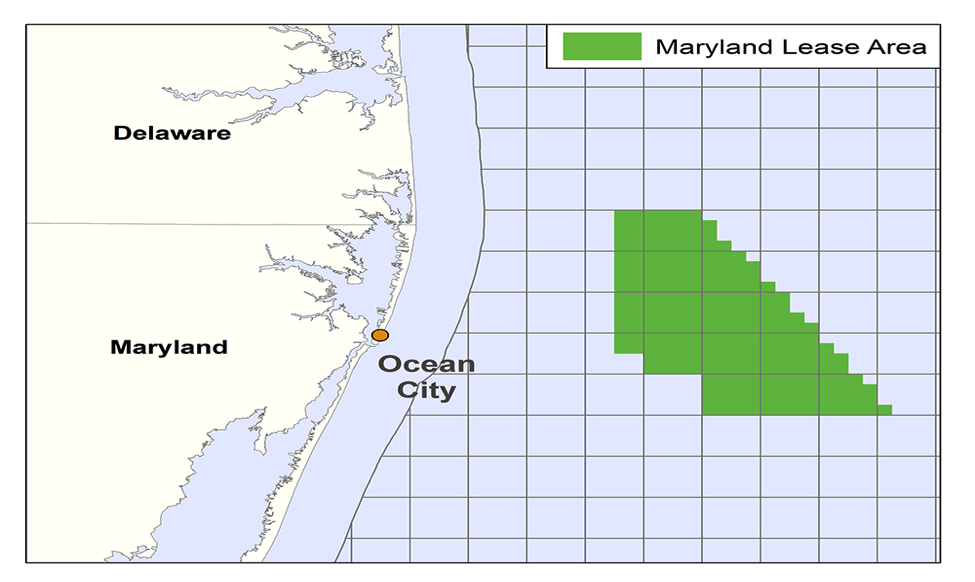
The Maryland Public Service Commission (PSC) approved two offshore wind projects off the coast of Ocean City in 2017. But, the Ocean City officials want the wind farms to be sited at least 26 nautical miles off the coast—a distance such that the wind turbines would not be visible from the shoreline. One developer, US Wind, agreed to place its turbines no closer than 17 miles from the coast and the other developer, Deepwater Wind, would locate its wind turbines about 17 to 21 miles offshore. Neither has agreed to the 26 miles requested by the local people. The council asked the mayor of Ocean City, Rick Meehan, to write a letter to the Governor of Maryland, Larry Hogan, confirming that Ocean City is not opposed to the concept of offshore wind farms, but the turbines need to be sited at a distance from which they would not be visible from the shore.

Source: BOEM
Source: BOEM

The letter also points out that the commercial fishing industry, the maritime transportation industry, the Coast Guard, and the Department of Defense have expressed opposition to offshore wind turbines. The letter claims offshore wind can hinder radar operation, impacting Coast Guard search and rescue efforts and national defense radar installations.

Another issue is that one of the town council members wants the wind turbines to be located 33 miles offshore. The justification for the further distance is that technological advances since the original approval of the projects resulted in the development of much taller turbines capable of producing even more energy, but needing a greater distance from shoreline not to be seen by resort visitors. The turbines can be as much as 12 megawatts each and over 500 feet tall, rather than the 2 megawatt, 200-feet high turbines originally discussed in 2012.

US Wind, however, asserts that the height increase is just 17 percent with the 8 megawatt turbines that they planned to install compared to the 4 megawatt turbines that they were planning originally to install. The 4 megawatt turbine at 165 meters would be 541 feet tall, while the 8 megawatt turbine at 196 meters would by 643 feet tall. For comparison purposes, the Washington Monument is 555 tall.

The other Ocean City offshore wind builder, Orsted, however, will use the 12-megawatt turbines that are 853 feet tall. The Skipjack Wind Farm will consist of about 15 turbines and be 19.5 miles off the Maryland coast.

The next step in the US Wind project is the installation of a 328-foot tall meteorological tower that arrived in mid-September to be located a little over 14 miles off the coast of Ocean City—about in the middle of the company’s approved Wind Energy Area. The tower will be used to collect wind resource data within the Maryland lease area in advance of the future installation of as many as 32 large offshore wind turbines. The installation of the meteorological tower was originally scheduled for July, but the project was pushed back for several reasons, including storm activity in the Gulf of Mexico, where the tower was being delivered, in August, and the threat of hurricane activity.

The Ocean City Council is Persistent

The prolonged battle between the city and the state included at least two formal resolutions passed by the Mayor and Council, endless discussions on how to address the wind turbine distance, a letter-writing campaign, and a bill in the Maryland General Assembly that would force the siting of the wind turbines at least 26 nautical miles offshore. But those efforts have not changed US Wind’s plan to site the wind turbines 17 miles off the coast. To date, there has not been a single public hearing conducted in the Ocean City corporate limits by any regulatory agency to listen to the concerns of the citizens regarding the wind towers. However, there are still several federal regulatory hurdles to overcome for the two proposed wind energy projects since they are in federally-owned waters, so there will be additional opportunities for Ocean City’s officials to comment.

Federal Regulatory Hurdles

One of the first large offshore wind projects expected to be built is off the coast of Martha’s Vineyard in Massachusetts. However, Vineyard Wind, the developer, is facing permitting challenges and it expects a federal environmental review of the facility to be delayed until the end of the year. The Department of Interior indicates that proposed offshore wind facilities are major infrastructure projects that must undergo appropriate review and approval. The department is continuing to incorporate feedback received on the Draft Environmental Impact Statement and is working closely with cooperating agencies to facilitate the environmental review of the project. Vineyard Wind is the first major development to reach the final stages of permitting and has the potential to set regulatory precedent for large projects under consideration for development in New York, New Jersey, Maryland, and other states.

One of the hurdles is that NOAA Fisheries, a division of the National Oceanic and Atmospheric Administration in the Department of Commerce, criticized the draft study, indicating that it did not adequately consider the project’s potential impact on fisheries or provide the mitigation efforts needed to compensate fishermen. According to some fishing companies, this is the first time officials in Washington, D.C. have seriously considered their concerns. Further, NOAA Fisheries’ comments create a potential legal opening for opponents to sue and stop the project.

Part of the timing issue for wind developers is that the federal tax credit for wind expires at the end of this year. The project had anticipated taking a 24 percent tax credit on $2.8 billion in capital costs. The tax credit is what makes these projects feasible since offshore wind is one of the most expensive forms of supplying electricity. Projects can still qualify for the federal subsidy, however, if they can show they began construction this year, but satisfying the IRS requirements needed to secure that credit may not be straightforward.

The Department of Interior has 3 ongoing studies related to the Maryland offshore wind farms:

Conclusion

The town council of Ocean City, Maryland is displeased regarding the location of the wind farms to be constructed offshore. The wind turbines are planned to be as close as 17 miles from shore, while the council wants the turbines sited 26 to 33 miles offshore, depending on the technology. There are still federal regulatory hurdles before final approval of the wind farms and construction can take place. But, the federal tax credit that make these expensive offshore projects feasible may be an issue since it expires at the end of this year.

The post Ocean City, Maryland Still Displeased with Placement of Offshore Wind Farms appeared first on IER.

Custom Extraction Using an SEO Crawler for CRO and UX Insights - Whiteboard Friday

Posted by MrLukeCarthy

From e-commerce to listings sites to real estate and myriad verticals beyond, the data you can harness using custom extraction via crawler tools is worth its weight in revenue. With a greater granularity of data at your fingertips, you can uncover CRO and user experience insights that can inform your optimizations and transform your customer experience.

In this episode of Whiteboard Friday, we're delighted to welcome Luke Carthy to share actionable wisdom from his recent MozCon 2019 presentation, Killer CRO and UX Wins Using an SEO Crawler.

Video Transcription

Hey, Moz. What's up? Wow, can I just say it's incredible I'm here in Seattle right now doing a Whiteboard Friday? I can't wait to share this cool stuff with you. So thanks for joining me.

My name is Luke Carthy. As you can probably tell, I'm from the UK, and I want to talk to you about custom extraction, specifically in the world of e-commerce. However, what I will say is this works beautifully well in many of the verticals as well, so real estate, in job listings. In fact, any website that can pretty much spit out HTML in a web crawler, you can use custom extraction.

What is custom extraction?

Let's get started. What is custom extraction? Well, as I kind of just alluded to, it allows you, when you're crawling using like Screaming Frog, for example, or DeepCrawl or whatever it is you want to use, it allows you to grab and extract specific parts of the HTML and export it to a file, a CSV, in Excel, or whatever you prefer.


As a principle, okay, great, but I'm going to give you some really good examples of how you can really leverage that. So e-commerce, right here we've got a product page that I've beautifully drawn, and everything in red is something that you can potentially extract. Although, as I said, anything on the page you can. These are just some good examples.

Product information + page performance

Think about this for a moment. You're an e-commerce website, you're a listing site, and of course you have listing pages, you have product pages. Wouldn't it be great if you could very quickly, at scale, understand all of your products' pricing, whether you've got stock, whether it's got an image, whether it's got a description, how many reviews it has, and of the reviews, what's the aggregate score, whether it's four stars, five stars, whatever it is?

That's really powerful because you can then start to understand how good pages perform based upon the information that they have, based upon traffic, conversion, customer feedback, and all sorts of great stuff, all using custom extraction and spitting it out on say a CSV or an Excel spreadsheet file.

Competitive insights

But where it gets super powerful and you get a lot of insight from is when you start to turn the lens to your competitors and you think about ways in which you can get those really good insights. You may have three competitors. You may have some aspirational competitors. You may have a site that you don't necessarily compete with, but you use them on a day-to-day basis or you admire how easy their site was to use, and you can go away and do that.

You can fire up a crawl, and there's no reason why you couldn't extract that same information from other competitors and see what's going on, to see what pricing your competitors are selling an item at, do they have that in stock or not, what are the reviews like, what FAQs do people have, can you then leverage that in your own content. 

Examples of how to glean insights from custom extraction in e-commerce

Example 1: Price increases for products competitors don't stock

Let me give you a perfect example of how I've managed to use this.

I've managed to identify that a competitor doesn't have a specific product in stock, and, as a result of that, I've been able to increase our prices because they didn't sell it. We did at that specific time, and we could identify the price point, the fact that they didn't have any stock, and it was awesome. Think about that. Really powerful insights at massive amounts of scale. 

Example 2: Improving facets and filters on category pages

Another example I wanted to talk to you about. Category pages, again incredibly gorgeous illustrations. So category pages, we have filters, we have a category page, and just to switch things up a little bit I've also got like a listings page as well, so whether it's, as I said, real estate, jobs, or anything in that environment.

If you think about the competition again for a second, there is no reason why you wouldn't be able to extract via custom extraction the best filters that people use, the top filters, the top facets that people like to select and understand. So you can then see whether you're using the same kind of combinations of features and facets on your site and maybe improve that.

Equally, you can then start to understand what specific features correlate to sales and performance and impacts and really start to improve the performance of how your website performs and behaves for your customers. The same thing applies to both environments here. 

If you are a listing site and you list jobs or you list products or classified ads, is it location filters that they have at the top? Is it availability? Is it reviews? Is it scores? You can crawl a number of your competitors across a number of areas and identify whether there's a pattern, see a theme, and then see whether you can leverage and better that and take advantage of that. That's a great way in which you can use it. 

Example 3: Recommendations, suggestions, and optimization

But on top of that and the one that I am most fascinated with is by far recommendations.

In the MozCon talk I did earlier I had a statistic, and I think I can recall it. It was 35% of what people buy on Amazon comes from recommendations, and 75% of what people watch on Netflix comes from suggestions, from recommendations.

Think about how powerful that is. You can crawl your own site, understand your own recommendations at scale, identify the stock of those recommendations, the price, whether they have images, in what order they are, and you can start to build a really vivid picture as to what products people associate with your items. You can do that on a global scale. You can crawl the entire of your product portfolio or your listing portfolio and get that. 


But again, back to powerful intelligence, your competitors, especially when you have competitors that might have multivariable facets or multivariable recommendations. What I mean by that is we've all seen sites where you've got multiple carousels. So you've got Recommended for You.

You might have People Also Bought, alternative suggestions. The more different types of recommendations you have, the more data you have, the more intelligence you have, the more insight you have. Going back to say a real estate example, you might be looking at a property here. It's at this price. What is your main aspirational real estate competitor recommending to you that you may not be aware of?

Then you can think about whether the focus is on location, whether it's on price, whether it's on number of bedrooms, etc., and you can start to understand and behave how that can work and get some really powerful insights from that. 

Custom extraction is all about granular data at scale

To summarize and bring it all to a close, custom extraction is all about great granular data at scale. The really powerful thing about it is you can do all of this yourself, so there's no need to have to have meetings, send elaborate emails, get permission from somebody.

Fire up Screaming Frog, fire up DeepCrawl, fire up whatever kind of crawler you want to use, have a look at custom extraction, and see how you can make your business more efficient, find out how you can get some really cool competitive insights, and yeah, hopefully, fingers crossed that works for you guys. Thank you very much.

Bonus resources:

Video transcription by Speechpad.com


This is a meaty topic, we know — if you enjoyed this Whiteboard Friday and find yourself eager to know more, you're in luck! Luke's full presentation at MozCon 2019 goes even more in-depth into what custom extraction can do for you. Catch his talk along with 26 other forward-thinking topics from our amazing speakers in the MozCon video bundle:

Access the sessions now!

We recommend sharing them with your team and spreading the learning love. Happy watching!


Sign up for The Moz Top 10, a semimonthly mailer updating you on the top ten hottest pieces of SEO news, tips, and rad links uncovered by the Moz team. Think of it as your exclusive digest of stuff you don't have time to hunt down but want to read!
Thursday, October 3, 2019

Natural Gas Assessment Highest in Potential Gas Committee’s History

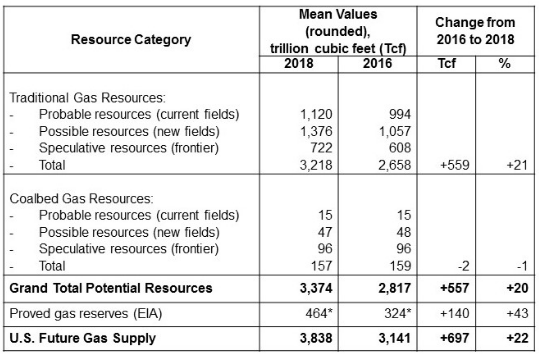
The Potential Gas Committee announced that the amount of producible natural gas in the United States increased by about 20 percent since its last assessment two years ago and is the highest assessment in the organization’s 54 year history. Total recoverable natural gas resources are 3,374 trillion cubic feet—enough to sustain current levels of U.S. natural gas consumption for over a century. The increase from its last assessment is 557 trillion cubic feet, or about the energy equivalency of almost 100 billion barrels of oil. Changes in the total assessment are due primarily to the evaluation of recent drilling, well-test and production data. When adding in estimates of proved gas reserves from the Energy Information Administration (EIA), the future U.S. gas supply totals 3,838 trillion cubic feet—22 percent higher than the year-end 2016 assessment.

Source: Potential Gas Committee

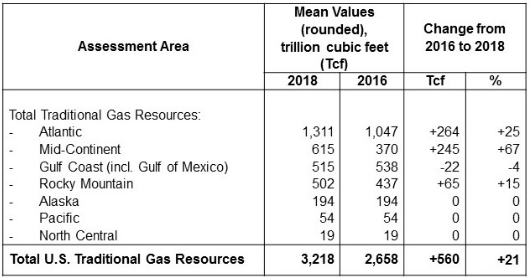
The Atlantic area ranks as the country’s richest gas resource area with 41 percent of total U.S. traditional resources, followed by the Mid-Continent with 19 percent, the Gulf Coast (including the Gulf of Mexico) with 16 percent, and Rocky Mountains with 16 percent. The Atlantic area saw the largest regional gains by volume, increasing by 264 trillion cubic feet from 2016 estimates due to new drilling and production in the Marcellus and Utica shale plays. In the midcontinent region, which includes the Permian Basin, recoverable gas volumes increased by 67 percent to 615 trillion cubic feet in year-end 2018 due to intensive developments of conventional, tight, and shale reservoirs in the Permian Basin in West Texas and parts of New Mexico.

Source: Potential Gas Committee

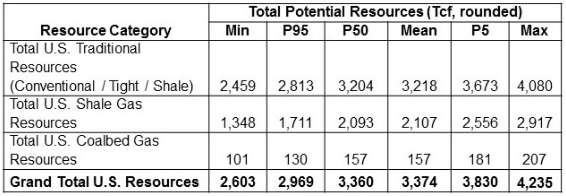
The importance of shale gas in the United States is evidenced by the fact that the PGC’s mean total assessed shale gas resource of 2,107 trillion cubic feet for year-end 2018 accounts for approximately 62 percent of the country’s total potential resources. The growth of shale gas resources from year-end 2016 to year-end 2018 was 310 trillion cubic feet (17 percent). P95 in the table below represents a 95-percent probability of at least the amount tabulated; other P values are defined similarly.

Source: Potential Gas Committee

The Natural Gas Resource Assessment

The Potential Gas Committee reports its natural gas resource assessments in three categories of decreasing geological certainty—probable, possible, and speculative. For each category, a minimum, most likely, and maximum volume is assessed in each of 90 onshore and offshore provinces in the Lower 48 States and Alaska. Based on new exploration results, drilling and production information and various other data that become available, resources may be reclassified at the province level from one category to another and into proved reserves.

September EIA Short-Term Forecast

EIA’s Short-Term Energy Outlook was also recently released, showing increased consumption and production of natural gas in the United States. The agency expects the share of utility-scale electricity generation from natural gas-fired power plants to increase from 34 percent in 2018, to 37 percent in 2019, and 38 percent in 2020, pushing coal-fired generation lower with projected shares of 25 percent in 2019 and 22 percent in 2020 from 28 percent in 2018.

During the first half of 2019, the average cost of natural gas delivered to power generators was 9 percent lower than the same period in 2018. Due to the abundance of natural gas, EIA expects the delivered cost of natural gas during the second half of 2019 to be 31 percent lower than last year. With lower natural gas delivered prices, EIA expects lower wholesale electricity prices in 2019 compared with 2018.

EIA forecasts that dry natural gas production will average 91.4 billion cubic feet per day in 2019, 8.0 billion cubic feet per day higher than in 2018, which was a record high for production. EIA expects monthly average natural gas production to grow in late 2019 and then decline slightly during the first quarter of 2020 as the lagged effect of low prices in the second half of 2019 reduces natural gas drilling. EIA forecasts that growth will resume in the second quarter of 2020, and natural gas production in 2020 will average 93.2 billion cubic feet per day.

Conclusion

The future is bright for U.S. natural gas as an abundance of resources and low-cost production keep gas prices low. Add to this the latest assessment of the Potential Gas Committee with natural gas resources increasing by 20 percent and one can see why the nation can have affordable natural gas for well over a century.

The post Natural Gas Assessment Highest in Potential Gas Committee’s History appeared first on IER.

Wednesday, October 2, 2019

The 2019 Holiday Checklist for Local SEO Heroes

Posted by MiriamEllis


Right now, the shoppers nearest you are making some pretty long gift lists. US holiday sales are predicted to surpass $1.1 trillion, with 4.5–5% growth between November–January. That’s a lot of gadgets, garments, games, goodies, and gizmos to bought and sold.

Winter weather and long lines will be braved, traffic endured, tired feet soaked, and patience tested in the search for the perfect gift for everyone on everyone’s list. Holiday shopping can and should be cheery, but sometimes it can be a bit of an overload. The end of the year can put local businesses back in the black, but it can be kind of stressful, too.

And that’s why local business marketers need a list of their own. Your agency can be holiday heroes, both to clients and their customers. An organized approach can ensure that no mom with three kids in tow is inconvenienced by a wrong address on a Facebook listing, and no dad is doomed to wander lonely aisles for hours with no help in sight. Strategic planning can save your clients, too, from total holiday frazzle.

Be of good cheer! Download the Moz Holiday Local SEO Checklist, share it with each of your clients, and plan for reputation, rankings, and revenue to rise as a result of your well-orchestrated campaign:

Get your free copy!

Holiday marketing success in 3 segments

Part 1: The client

The local business owner provides the basic, raw materials and agrees to being ready with:

  • Knowledge of their customers and market
  • Sufficient, well-trained staff
  • Front door and indoor signage explaining hours and support availability for complaints
  • Adequate stock
  • Content for marketing
  • A joint commitment to ongoing local listing/social engagement during the holiday season

Part 2: The local marketing agency

Your agency knits up the online picture of local businesses and is ready with:

  • Accurate, complete, persuasive local business listings
  • Unique marketing ideas to set the client apart
  • A joint commitment to ongoing local listing/social engagement during the holiday season
  • Publication of holiday content, on time and in the right places
  • Analytics and post-holiday analysis

Part 3: The customer

The shopper is aided along their merry way by:

  • A great online experience
  • A great offline experience
  • An overall experience that’s exceptional enough to inspire them to leave a review, recommend the business via WoM, and return for more shopping after New Year’s Day.

A lot of time and care goes into crafting happy holiday customers. Ready for a detailed list of the finer points that could take your agency’s reputation to heroic proportions as we put a bow on 2019?

Download the holiday checklist!


Sign up for The Moz Top 10, a semimonthly mailer updating you on the top ten hottest pieces of SEO news, tips, and rad links uncovered by the Moz team. Think of it as your exclusive digest of stuff you don't have time to hunt down but want to read!

Tuesday, October 1, 2019

No, Capitalism Doesn’t Threaten Humanity

Presumably bolstered by the fiery claims of Greta Thunberg and the general theme of Climate Week, people on Twitter have been declaring that capitalism threatens humanity. This angst rekindled interest in a Guardian article that ran a few months ago, in which author George Monbiot argued that the very nature of capitalism is “incompatible with the survival of life on Earth.” Not only do such claims ignore the obvious progress of humanity staring us in the face—and the environmental activists are supposed to be the empirical ones in this debate—but even if Monbiot’s worries about the climate were correct, capitalism would still be the best social system to deal with the crisis.

Monbiot’s Case Against Capitalism

The following excerpt summarizes Monbiot’s two-pronged argument for why capitalism threatens our entire species:

Capitalism’s failures arise from two of its defining elements. The first is perpetual growth. Economic growth is the aggregate effect of the quest to accumulate capital and extract profit. Capitalism collapses without growth, yet perpetual growth on a finite planet leads inexorably to environmental calamity.

…The absolute decoupling needed to avert environmental catastrophe (a reduction in material resource use) has never been achieved, and appears impossible while economic growth continues. Green growth is an illusion.

A system based on perpetual growth cannot function without peripheries and externalities. There must always be an extraction zone – from which materials are taken without full payment – and a disposal zone, where costs are dumped in the form of waste and pollution. As the scale of economic activity increases until capitalism affects everything, from the atmosphere to the deep ocean floor, the entire planet becomes a sacrifice zone: we all inhabit the periphery of the profit-making machine.

…

The second defining element is the bizarre assumption that a person is entitled to as great a share of the world’s natural wealth as their money can buy. This seizure of common goods causes three further dislocations. First, the scramble for exclusive control of non-reproducible assets, which implies either violence or legislative truncations of other people’s rights. Second, the immiseration of other people by an economy based on looting across both space and time. Third, the translation of economic power into political power, as control over essential resources leads to control over the social relations that surround them.

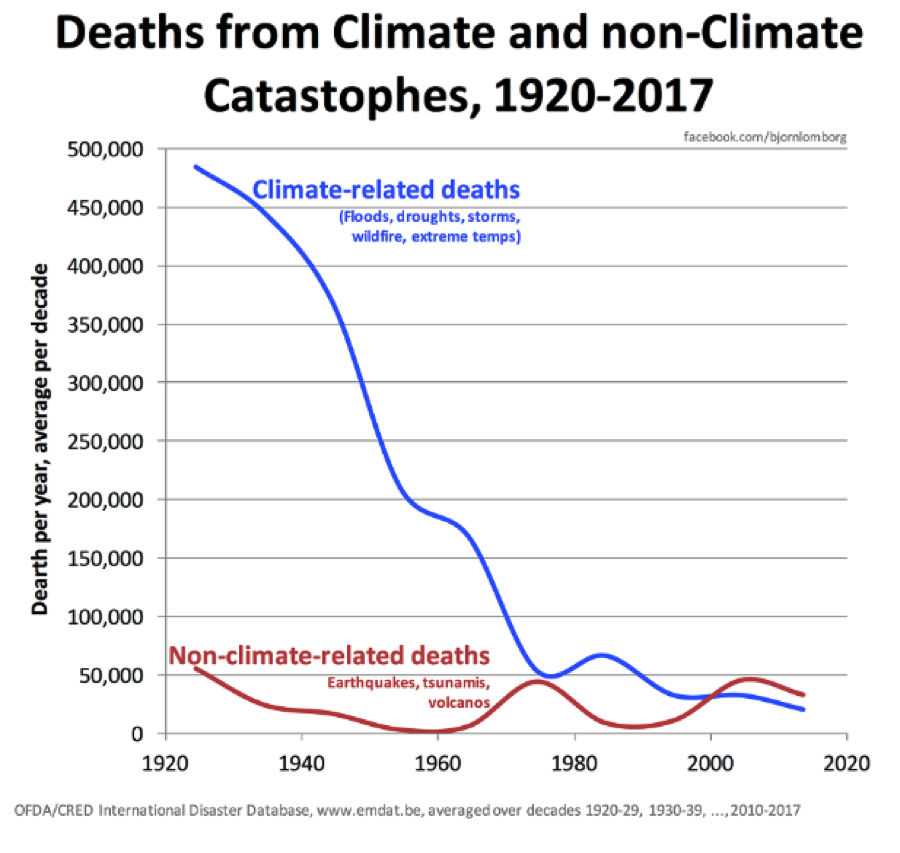
Monbiot’s critique of capitalism is entirely unfounded. In the first place, it defies all empirical grounding, which is ironic because it’s my side of this debate that’s allegedly composed of unscientific “deniers.” Especially as formerly communist countries move towards freer markets, the world has seen dramatic improvements in living standards, while the relevant availability of “depletable” resources has increased; even climate-related deaths have plummeted over time.

But it gets even worse for Monbiot’s thesis. Even if we imagine a scenario—contrary to reality—where humanity did run into a crisis because of natural resource crunch, the best way to deal with the situation would be reliance on private property and market prices. To blame capitalism for the potential problems of a finite world is like blaming thermometers for the flu.

Just the Facts: It’s Getting So Much Better All the Time

In this section I’ll illustrate some of the basic facts, documenting that human welfare has drastically improved during the same period that we have ostensibly seen the ravages of human-induced climate change.

First, consider a chart from Bjørn Lomberg (and reproduced by Marlo Lewis) that shows climate-related deaths from 1920-2017:

Deaths from Climate Change

It’s hard to see evidence of impending disaster in the above chart.

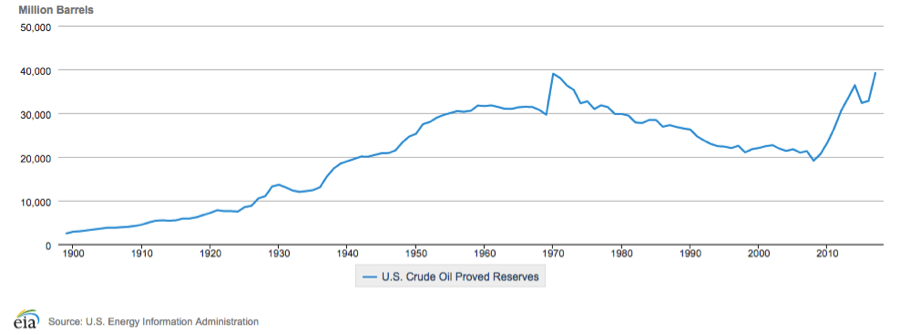
Next, because Monbiot is worried about the “finite” planet, let’s look at U.S. “proved reserves” of crude oil, from the Energy Information Administration (EIA):

U.S. Crude Oil Proved ReservesUS Crude Oil Proved Reserves

As the chart shows, U.S. “proved reserves” of crude are at an all-time high at some 39.2 billion barrels (as of 2017), up from 13.6 billion barrels in 1930. The increase in crude reserves has occurred despite the fact that the U.S. has produced an enormous amount of crude oil over this period.

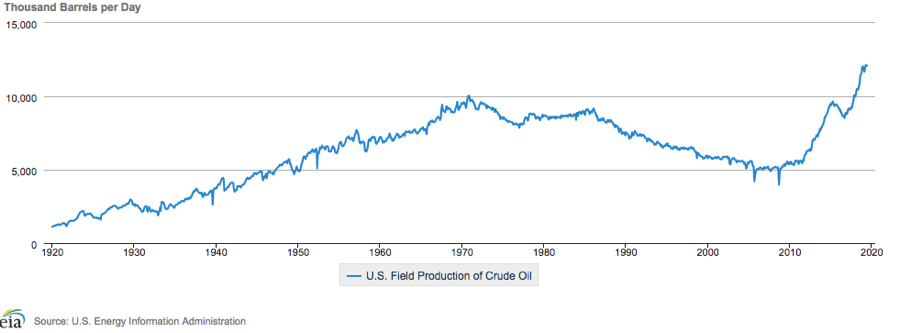
Indeed, as the separate EIA chart shows below, since 1950 U.S. crude production has rarely fallen below 5 million barrels per day, and it’s currently (as of June 2019) at a record high of some 12.1 million barrels per day.

U.S. Field Production of Crude OilUS Production of Crude Oil

The pattern is similar for world oil reserves and production, but I chose to use U.S. data because it is the most reliable. There’s also a similar pattern for natural gas and coal; as this 2011 IER report shows, North America alone has enough fossil fuels in the broader category of “recoverable resources” to satisfy current consumption rates for literally centuries. And they are growing. According to the Potential Gas Committee’s latest report, U.S. reserves of natural gas increased by the energy equivalent of 100 billion barrels of oil in just the last 2 years.

Now how can this be possible? How can the U.S., for example, have more “proved reserves” of oil now, than it did in (say) 1950? The answer is that it doesn’t make sense for humans to go out and find every last drop of oil (or lump of coal) housed in planet Earth. At any given time, it’s only sensible to have located the precise deposits of a healthy margin of such depletable resources, which is only a small fraction of the physical stockpile.

Yes, since there is a finite amount of crude oil, it must be the case that humanity will eventually have to switch to some other energy source. But humanity—especially in the modern age of relatively capitalistic institutions—has so far had no trouble maintaining consistent increases in total output, notwithstanding the “finite” resources on Earth (or the physical universe, for that matter).

Presumably Monbiot would say that past success is no guarantee of future performance, but as a different Guardian article explains, the UN reports that the world has seen “astonishing” improvements in human welfare just since 1990. Specifically, more than a billion people were lifted out of “extreme poverty,” with “the number of people living on less than $1.25 a day [falling] from 1.9 billion in 1990 to 836 million in 2015.”

What would the data have to look like to vindicate capitalism from the charges of Monbiot?

Even in a Collapsing World, Capitalism Would Be Our Best Defense

As I illustrated in the previous section, Monbiot’s hysterical warnings are utterly divorced from reality. At most, he has to argue that the future will be radically different from the past. In other words, Monbiot must argue, “Capitalism is going to start killing us, starting…NOW.”

Yet even the more dire forecasts in the UN IPCC’s latest summary of the climate science and impact analyses come nowhere close to threatening humanity itself. It’s still the case, even in the worst-case scenarios examined, that per capita global GDP is much higher in (say) the year 2100 than now. In an excellent article for CEI, Marlo Lewis gives the details, along with other lines of evidence to show that climate change, though possibly a serious challenge, is hardly an “existential threat” as Monbiot and several Democratic presidential candidates are matter-of-factly claiming.

But it gets even worse. Even if it were the case that the natural environment were such that humanity really did have to settle for constant (or even declining) living standards, private property and market prices—i.e., capitalism—would still be vital for helping humans organize their activities in the best way.

For example, Harold Hotelling proved way back in 1931 what the equilibrium trajectory of spot oil prices would be, in a hypothetical scenario where we started with a fixed pool and knew what the rate of consumption would be for various possible spot prices. The elegant answer (given certain assumptions) is that the market price of oil would rise according to the interest rate, so that on the margin the owner of the pool would be indifferent between selling one more barrel today, versus holding it off the market to sell next year. (For example, if oil were selling for $100 today and the interest rate were 5%, then the spot price would have to rise to $105 next year. This is because the owner could always sell a barrel today for $100 and then invest in bonds to yield $105 next year.)

I’m guessing that Monbiot would be scandalized by such bean-counting, but this is exactly the kind of outcome we want capitalism to foster. Given that there is a finite quantity of a useful resource like oil, the optimal pattern of usage is that it is gradually drawn down over time, being devoted to ever more important uses as it becomes scarcer and scarcer. The higher spot price of the future ensures that distant generations “register their claim” on the use of the oil, while the positive interest rate in a sense reflects the “impatience” of humans. (If the interest rate were 0% and the population were always growing, we would have the absurd result that no oil would ever be used—it would keep getting passed down the generations, growing in market value but with it never being profitable to actually burn a single barrel.)

Conclusion

George Monbiot alleges that capitalism, left unchecked, will cause the literal extinction of humanity. His arguments ignore all of the evidence of capitalism’s benefits staring us in the face. Yet even on a theoretical level, private property and market prices help organize human activity so that we can deploy our scarce resources in the most efficient manner. Empirically, capitalism has allowed humanity to flourish with an ever-rising standard of living. But even in a catastrophic scenario where we hit a hard resource constraint, capitalism would still be an important tool in our defense, just as we would badly need math and science to help us cope with the emergency.

The post No, Capitalism Doesn’t Threaten Humanity appeared first on IER.

Australia is Reconsidering the Nuclear Option

Australia is finally reassessing its ban on commercial nuclear power generation.

The country, which has more known uranium resources than any other, is currently the 3rd largest uranium producer in the world, 6,937 metric tons in 2017, surpassed by only Kazakhstan and Canada.

The Australian House of Representatives Standing Committee on the Environment and Energy just closed a period of open inquiry into “the prerequisites for nuclear energy in Australia” on September 16. At a public hearing held on Wednesday, September 18, the chair of the Committee on Energy and Environment, Ted O’Brien, said that, “It’s important to determine not just whether nuclear energy stacks up economically and technologically but also that it is suitable for Australia on environmental, safety and security grounds.” These hearing are the place for various stakeholders to make their arguments about the feasibility and viability of nuclear power for the country.

Public hearings on the topic will continue until October 2. The House Standing Committee on Industry, Innovation, Science, and Resources held a nuclear industry roundtable on September 20 where proponents of nuclear power in Australia spoke.

Allowing nuclear development to begin in Australia could be as simple as amending the National Conservation Act 1999 to remove four words, section 140A(1)(b), “a nuclear power plant,” from the list of prohibited nuclear installations named in the act which also bans nuclear fuel fabrication plants, enrichment plants, and reprocessing facilities. Amending this act to allow nuclear power plant construction would be a fairly simple first step for the Morrison government to allow nuclear plants to be considered in Australia, and give developers and entrepreneurs the chance to float design ideas and begin the process of complying with Australia’s stringent environmental regulations.

In addition to the National Conservation Act 1999, the Australian Radiation Protection and Nuclear Safety Act 1998 also involves a “prohibition on certain nuclear installations.” But, its prohibitions apply only to Commonwealth owned entities, so it prohibits construction of nuclear power plants by the national government, but puts no such ban on state or private construction, as such; amendment of this law is not entirely necessary to allow nuclear energy in the country, but may be a good step to take later in order to remove that additional restriction.

The coalitions on either side of this issue have made some unexpected bedfellows. Although the Australian Council of Trade Unions (ACTU) is part of a coalition of groups aiming to discourage Prime Minister Morrison’s government from embracing nuclear power, one important union, the Australian Workers Union (AWR) has set itself apart, emphasizing instead the jobs growth that could be produced by lifting the ban. Its National Secretary, Daniel Walton, described the ban as “ludicrous.” and said that, “Most of our energy crisis is due to partisan pigheadedness – on both sides … so those of us on the progressive side of politics can’t continue to reflexively reject zero-emission compromise options.” While the AWR is supporting attempts at repealing the ban, the ACTU opposes the attempt in part because it is concerned about radiation and waste disposal, and worries that workers may see more harms than benefits from development of this technology.

Australia currently relies mainly on coal for electricity. Seventy-five percent of its electricity is supplied by coal-fired power plants. Coal accounts for 40 percent of its overall energy consumption, oil for 34 percent, and gas for 22 percent. So, although anti-nuclear advocates claim that a 100-percent renewable energy portfolio is feasible, it is certainly far off, and replacing high energy density coal, oil, and gas with low energy density wind and solar will likely prove quite difficult. Its current emissions target is to “reduce greenhouse gas emissions to 26–28 percent below 2005 levels by 2030.” Without nuclear power, it is likely that the country will struggle to meet those targets.

Many environmental, social, and labor groups oppose nuclear on the grounds that it is unsafe and that this safety hazard would most heavily burden the working class and poor. Some also view it as merely a dangerous distraction from the renewable energy future they envision, including former Prime Minister Malcolm Turnbull who described it as a “loopy” idea, and expressed concerns over safety and economic feasibility, emphasizing instead a focus on renewables and increased energy storage.

Although concerns about nuclear powers safety are often brought up in conversations about its efficacy as a power generation source, numerous studies have concluded that it is one of the safest means of generating electricity. Fears fomented by dramatized portrayals of events like the 1986 Chernobyl disasters in media do much to cover up the reality that nuclear power is incredibly safe.

It seems illogical for the country with the largest uranium resources on earth to ignore the option of nuclear power entirely. Whether they build significant nuclear generating capacity as a result or not, amending the National Conservation Act 1999 to allow for the development of nuclear energy capacity would be a smart move for the country, opening another avenue of possible production and diversifying their energy portfolio.

The post Australia is Reconsidering the Nuclear Option appeared first on IER.